Intero Performance · Operational Stress Reactivity Profile
Find out what pressure actually does to you.
The OSRP is not a personality quiz. It is a sequential protocol that puts your nervous system and your thinking under accumulating load — then measures what happens. Five capacities come out the other side. All of them yours, against your own baseline.
Free to take · 25–35 minutes · Requires a Polar H10 or a Bluetooth heart-rate monitor that reads R-R intervals

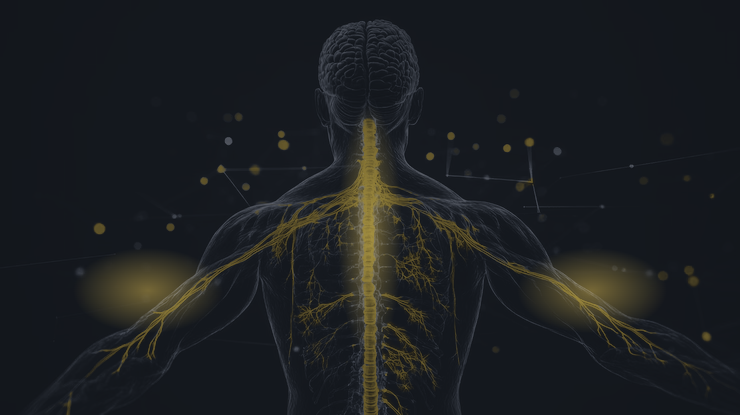
Hover a capacity to light its pathway. All five come from one sitting, read through a chest strap against your own baseline.


What we measure
Performance isn't one thing. It's five.
Five capacities decide how a person carries load. They aren't five tests — they're five readings of the same thing: the margin between what's on you and what you've got left to carry it with. One sitting, one stream of data, read five ways: threshold, slope, spread, time, recovery. Every read is against your own baseline — no percentiles, no comparison to a population.
Emotional Load Tolerance
How much weight you can carry before it starts changing your decisions. Measured from your heart data — not from what you say about yourself.
How accurate you stay in high-stakes human moments: the call, the room, the family. Low tolerance shows up as decisions made from activation instead of read.

Self-Regulation Stability
How steady you hold — not how high you peak. Measured while you answer questions about who you are: stability under self-reflection is its own kind of load.
How long you stay deliberate before you start reacting — and whether your own internal noise costs you more than the environment does.

Cognitive Endurance
How long your thinking holds up under sustained load. Ten timed prompts trace the fall-off directly — the slope, not the snapshot.
The hour in the shift where your judgment starts costing you — and how much runway you have before you should be handing decisions off.

Convergent Persistence
What happens when it all stacks at once — whether you keep solving when the problems get hard and the clock keeps running. Acceleration or fade, measured item by item.
Whether you close under time pressure or hand things off half-finished. Persistence is a separate capacity from capability.
Nervous System Recovery
How fast, and how completely, you come back when the load lifts. Recovery is trainable — this is the number the work moves first.
How much of tomorrow you get back. Slow return is the earliest signal that tolerance is thinning, months before performance drops.

Five capacities. One read. Against your own normal — never against a stranger.

How we measure it
Six stages. The load accumulates by design.
The order matters. You settle first, then the protocol stacks emotional, self-reflective, and cognitive load in sequence — and finishes by measuring how far back your system comes.
25–35 uninterrupted minutes, a quiet room, Chrome or Edge on a computer, and a Polar H10 — or any Bluetooth heart-rate monitor that transmits R-R intervals. R-R is the beat-to-beat timing, not the pulse number on the screen: plenty of monitors broadcast heart rate and never send it. Pairing checks for R-R before you begin and tells you if yours isn't sending any. Put the strap on 5–10 minutes ahead so the contact settles — the timer doesn't pause once you start.
The whole point is a look inside. Three of the five capacities are read from the changing gap between one heartbeat and the next — without those intervals there is no threshold, no spread, no recovery, and about sixty percent of the profile disappears. So we don't run it without them. The Polar H10 is what we build and test against.
What you get
Your baseline. Not theirs.
The demand side
Map My Environment
The battery reads what you have. This reads what your world asks of you. Twelve questions answered against written anchors — about five minutes, no strap — and your environment comes back as an IDC profile (Intensity · Diversity · Complexity) and a demand level on each of the five capacities. It stands on its own. Take the OSRP too and the two halves join.
How hard the peak load gets — consequence, scrutiny, the length of the grind.
How varied the demands are — context switching, interruption, no two days alike.
How many interacting variables and decisions — including the ones with no clean answer.
The same three dials our instructors use to design a live training event — pointed at your actual week instead.
Loaded by consequence weight, moral load, high-stakes human outcomes.
Loaded by scrutiny, composure held while being watched or judged.
Loaded by decision volume, sustained thinking, fragmented attention.
Loaded by everything stacking at once, hard problems under a running clock.
Loaded by thin recovery windows, load that follows you home.
For each capacity: how hard your environment leans on it, against how much that capacity cost you under load in your session. Nine outcomes, three names. The thresholds behind every cell are printed on your own read — we don't hide the arithmetic.
Margin is the environment asking hard and the capacity answering. Watch is demand and cost sitting close — fine today, first to move when the week gets worse. Friction is your world leaning hardest exactly where your session showed the most cost. That is not a verdict on you. It is the clearest place for the work to start.
Your environment profile is private to your account. It is never shown to an employer, never used to rank anyone, and never an input to any employment decision. Save it again in 30, 60, or 90 days and you can watch the environment change alongside the capacities — every read against your own history, never against a stranger.
No strap and no battery needed to map your environment — do that today and you already know which capacities your world leans on. The OSRP is what turns that into the fit.
Regulated isn't calm. It's accuracy.
One assessment. All five capacities. A starting point that's yours and nobody else's — take it seriously once and you have a baseline you can actually train against.
Free · Results the moment you finish · Polar H10 or an R-R–capable Bluetooth monitor required